On November 19, at the seminar “QR Code Payments: Transparency and Unlimited Experience”, Vietnam National Payment Corporation (NAPAS), together with 25 banks and payment intermediaries, performed a signing ceremony to jointly promote domestic and cross-border QR payments. The event took place under the witness of representatives from the SBV, Tax Department (Ministry of Finance) and the Domestic Market Management & Development Authority (Ministry of Industry and Trade), showing broad consensus within the financial ecosystem regarding the goal of standardizing and expanding the payment network.
Deputy Governor of the SBV, Phạm Tiến Dũng, stated that the success of QR payments stems from three key factors: consistent government and SBV policies promoting cashless payments; the introduction of a unified QR standard that removed interbank barriers; and strong market adoption—from banks to millions of merchants and consumers. (Source: VnEconomy)
Within the NAPAS system alone, as of October 2025, nearly 90 million accounts were using Mobile Banking to scan VietQR for daily money transfers. In the first 10 months of 2025, VietQR transfer transactions on the NAPAS network increased by over 52% in volume (3.6 billion transactions) and 85% in value (9.2 quadrillion VND) compared to the same period in 2024. (Source: Thời Báo Ngân Hàng)
Despite their convenience, the use of personal QR codes for payments has begun to reveal several concerns. This method makes transactions difficult to track comprehensively, complicating management and control. Consumers also lack adequate protection in case of disputes. More importantly, personal QR codes cannot support bilateral payment connectivity with other countries.
These realities show that Vietnam needs a more suitable QR method to meet the requirements of a modern payment system.
Vietnam is therefore moving from personal transfer QR codes to dedicated payment QR codes, allowing better international connectivity, reducing the risk of money laundering, and improving revenue monitoring. This upgrade aligns with global standards and better meets the fast-changing management and operational needs of the market.
Alongside the banking system’s standardization roadmap, VIETQRPay and VIETQRGlobal are becoming foundational services for expanding domestic and cross-border QR payments.
Designed for domestic retail payments, it allows full order information to be displayed when integrated into POS software. This enables businesses to easily reconcile transactions, manage refunds/cancellations, and ensure transparent financial operations.
Built for cross-border payments, its unified recognition system helps international travelers easily identify acceptance points and make fast, convenient payments without currency exchange.
Vietnam has already implemented two-way QR payment links with Thailand, Laos, and Cambodia, and is expanding to China, South Korea, Singapore, India, and Taiwan, helping promote trade and tourism across the region. (Sources compiled from Thời Báo Ngân Hàng)
Standardizing QR codes brings simultaneous benefits to consumers, businesses, and regulators:
More transparent transactions
Easy verification when needed
Improved security and protection
Payment information linked to each order
Accurate revenue management
Reduced errors
Enhanced service quality
Better tracking of cash flows
Improved tax collection efficiency
Reliable data for timely and comprehensive policy-making
According to NAPAS CEO Nguyễn Quang Minh, standardizing QR payment codes provides the foundation for a transparent and safe market that supports business growth. In the coming period, NAPAS will continue expanding the VIETQRPay network, accelerating VIETQRGlobal, and investing in security enhancements to provide a better digital payment experience.
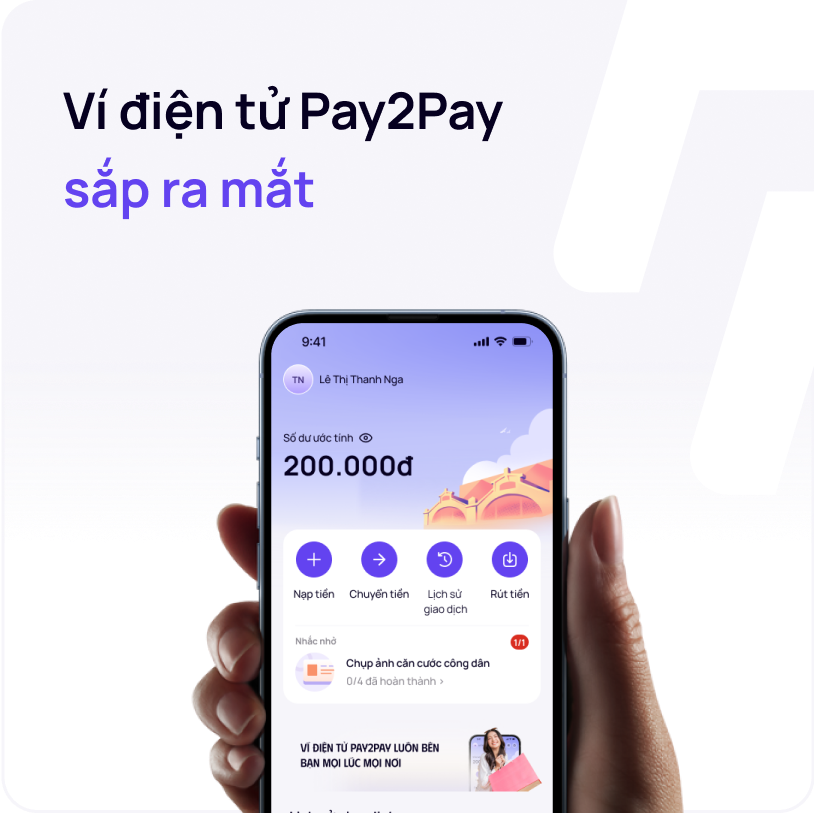
In this context, Pay2Pay, as a payment intermediary within the ecosystem, is actively strengthening its connectivity capabilities and aligning its technical standards according to the common direction set by NAPAS and partner banks. The contribution of intermediaries like Pay2Pay is expected to help expand QR acceptance networks, enhance interoperability, and bring more convenience to both businesses and users.