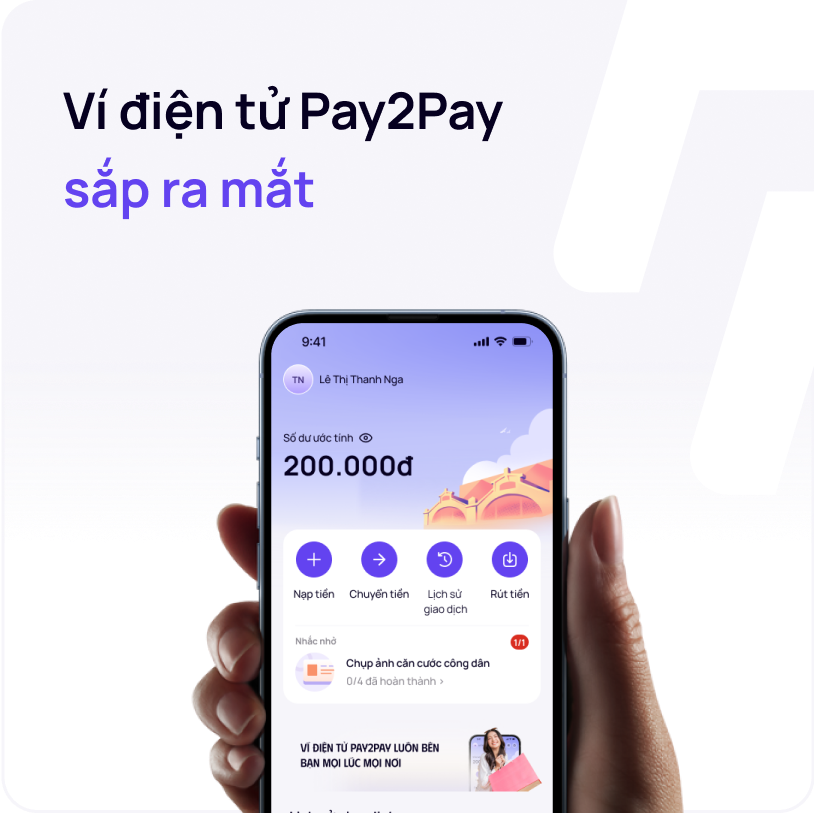
At many digital payment forums, experts emphasize that “one tap” is more than just touching a smartphone screen. It represents a fast, seamless, and highly reliable payment system that can be used in everyday situations.
Digital payments are rapidly expanding across sectors such as public administration, healthcare, education, retail, and tourism. Many localities have recorded millions of electronic transactions in just the first half of 2025. For small businesses and individual merchants, access to payment technology has become easier than ever. Platforms like Pay2Pay allow merchants to set up payment acceptance points within minutes, enabling small shops to receive bank transfers, QR payments, or online payments without investing in complex hardware.
In the coming years, QR codes will remain widely used, while emerging technologies such as tokenization, biometrics, and NFC contactless payments will further enhance speed and user experience.
From simple plastic cards, users are now familiar with various card types that go beyond payments. Cards increasingly serve as tools for identity verification and gateways to digital financial services.
As fraud risks become more sophisticated, financial institutions and intermediaries like Pay2Pay are applying additional security layers, including data encryption, multi-factor authentication, and AI-based transaction monitoring to better protect users. Customers are also encouraged to actively review their transaction history via apps to reduce the risk of data exposure.
Many metro lines and public transport systems have already integrated digital payments. Passengers can scan national ID cards, use payment cards, or QR codes to pass through gates, with processing times measured in milliseconds.
Some e-ticket applications support single-ride, daily, and weekly tickets, along with facial recognition for verification. By the end of 2025, more ticket checkpoints are expected to be digitized and connected to bus systems, railways, and the national digital identity platform.
Digital financial platforms continue to reach tens of millions of users. People can pay utility bills, tuition fees, medical expenses, and shop online with just a few taps on their phones.
Some e-wallets have implemented abnormal transaction alerts to help identify risks early. “Buy Now, Pay Later” services also enable individuals without stable income to access financial services more easily.
In business payments, Pay2Pay has become a preferred choice for many organizations thanks to its diverse payment methods, simplified processes, and stable transaction handling for both small-scale and large enterprises.
As digital payments grow, protecting personal data has become a top priority. Financial institutions continuously upgrade security standards, enhance data encryption, and strengthen authentication mechanisms.
Some systems can detect malware, phishing attempts, or abnormal device behavior. Many applications allow users to lock or unlock cards and adjust spending limits, giving them greater control. At the national level, monitoring systems have successfully prevented fraudulent transactions worth trillions of VND in recent years.
While digital payments are advancing rapidly, trust and user awareness remain the most critical factors. Technology only delivers real value when every transaction is safe, convenient, and provides peace of mind.
From technological infrastructure and policy frameworks to businesses and citizens, all stakeholders are contributing to building a smart payment ecosystem—one where paying, transferring money, and accessing public services become simpler and more accessible for everyone.