Since the Politburo issued Resolution 57 on breakthroughs in science, technology, and digital transformation, the banking sector has been identified as a pioneering force.
Initiatives such as national database connectivity, promotion of cashless payments, and expansion of digital banking services have laid a solid foundation for more convenient financial access for both individuals and businesses.
In this context, cross-border payments and online lending have emerged as two critical components, helping expand opportunities for business, consumption, and international integration.
However, despite rapid development, several challenges remain, including legal frameworks for e-identification and digital signatures, digital loan processes, technology standards, and cybersecurity and data protection.
(Source: Lao Dong Newspaper)
At the seminar, Ms. Nguyen Thi Thu, Deputy Director of the Payment Department at SBV, explained that cross-border payment refers to transactions between payers and recipients in different countries, involving multiple currencies and specialized settlement processes.
Currently, two main approaches are being implemented:
Bilateral models: such as UPI–PayNow (India–Singapore) and QR PayNow–PromptPay (Singapore–Thailand).
Multilateral models: such as major initiatives including Nexus (ASEAN-5), P27 (Nordic region), and mBridge.
In Vietnam, the legal framework is being refined through the Law on Credit Institutions, Foreign Exchange Ordinance, Decree 52/2024, and Circular 24/2024.
Implementation results have been notable:
Laos: Two-way connection via switch-to-switch model, over 3,000 transactions by July 2025
Thailand: QR connection since 2021, more than 56,000 transactions by July 2025
Cambodia: Services launched in 2023, over 920 transactions by July 2025
Vietnam is also expanding cooperation with China, South Korea, Malaysia, Indonesia, and others to better serve tourism, education, shopping, and remittance needs.
(Source: Lao Dong Newspaper)
According to NAPAS, although digital payments are growing rapidly, fragmentation remains among international cards, domestic cards, e-wallets, and QR codes—making seamless cross-border spending less convenient. This is where fintech companies play an increasingly critical role in bridging these gaps.
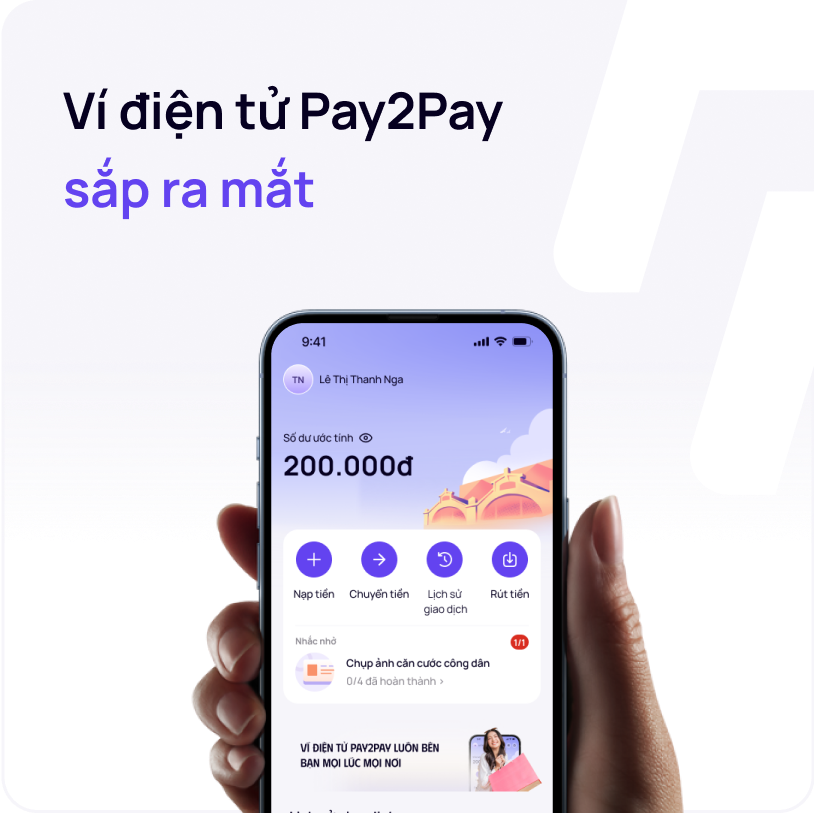
In recent years, many Vietnamese fintech firms, including Pay2Pay, have actively participated in technology standardization, financial connectivity, and payment infrastructure expansion.
Fintech platforms now enable businesses and users to easily integrate international payments, utilize cross-border QR, optimize remittance processes, and reduce transaction costs in the digital economy. These efforts help build an open ecosystem that promotes trade, tourism, and broader financial inclusion.
Additionally, bilateral QR payment models across ASEAN continue to expand, enabling users to pay directly in local currencies while traveling and shopping abroad.
Alongside cross-border payments, online lending is increasingly recognized as an effective tool for improving access to credit for individuals and businesses.
The process is faster, more transparent, and particularly suitable in an era of comprehensive digital banking transformation.
However, sustainable growth requires continuous improvements in the legal framework, standardized electronic identification, strong data security, and a fair, competitive market environment.
In the coming period, the State Bank of Vietnam will continue refining regulatory frameworks to better support cross-border payments and online credit services.
Simultaneously, financial switching and electronic clearing systems will be upgraded to modern technical standards, ensuring faster and more secure international transactions.
Authorities will also expand connectivity with additional countries in the region and globally, facilitating travel, education, and cross-border commerce for individuals and businesses.
Finally, communication efforts will be strengthened to guide customers in using digital financial services safely and effectively—contributing to trade, consumption, and international exchange in this dynamic era of digital transformation.